
AI in Retail: Revolutionizing the Shopping Experience
Introduction to AI in Retail
Have you ever wondered how your favorite online store seems to know exactly what you want, sometimes even before you do? Artificial Intelligence (AI) is reshaping industries globally, and retail is at the forefront of this transformation. By automating operations, enhancing customer experiences, and providing data-driven insights, AI is proving to be a game-changer. Retailers are increasingly adopting AI technologies to stay competitive, address customer demands, and improve operational efficiency. In a 2023 report by McKinsey, AI adoption in retail was projected to drive an estimated $2.95 trillion in potential value globally by 2030, emphasizing the profound impact AI is having on the industry.
In this article, we will explore how AI is addressing the current challenges in retail, and how it is revolutionizing areas such as personalized shopping experiences, dynamic pricing, customer interaction, inventory management, and more.
Key Takeaways
- AI offers scalable personalization and enhanced customer insights, helping retailers understand consumer behavior and preferences.
- Dynamic pricing algorithms driven by AI help retailers adapt in real-time, optimizing profitability.
- AI-powered chatbots and virtual assistants improve customer service efficiency and reduce operational costs.
- Machine learning algorithms provide demand forecasting, preventing overstock and stockouts.
- AI helps identify and prevent fraud while enhancing transaction security.
- Ethical considerations around AI usage, particularly in data privacy, are crucial for building consumer trust.
Current Problems in the Retail Industry
The retail industry faces several challenges, including inventory mismanagement, inefficient customer service, pricing strategies, and adapting to fast-changing consumer preferences. According to a National Retail Federation study, over 60% of retailers struggle with issues like inaccurate demand forecasting, which leads to overstocking or stockouts, resulting in lost sales and excess inventory costs.
Additionally, in an increasingly digital world, customers expect personalized, seamless shopping experiences both online and in-store. Retailers face mounting pressure to meet these expectations without significantly increasing costs.
How AI Can Current Problem in the Retail Industry
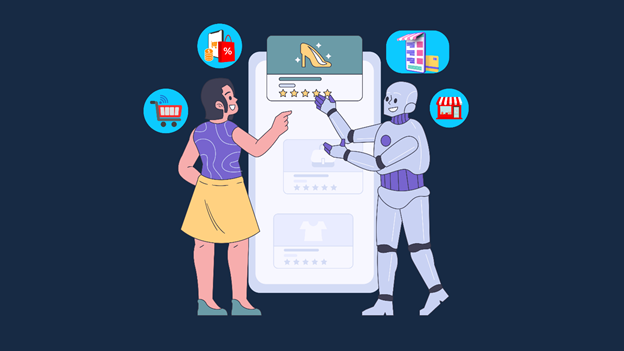
AI offers retail solutions to many of the industry’s pressing issues. From optimizing supply chains to improving customer service and offering personalized experiences, AI has the potential to address both operational inefficiencies and customer engagement challenges.
Personalization at Scale
Offering Tailored Product Recommendations
AI allows retailers to offer personalized product recommendations based on customer behavior and preferences. E-commerce giants like Amazon and Alibaba have been at the forefront of using AI algorithms to analyze browsing history, past purchases, and online behavior to recommend products. A study by Salesforce found that 67% of customers expect brands to personalize their experiences, and personalized recommendations lead to a 30% increase in sales on average.
Enhancing Customer Satisfaction Through AI
AI helps retailers deliver customized experiences by analyzing data to better understand customer needs. Machine learning models can predict what a customer might be interested in based on previous interactions, resulting in tailored promotions and personalized experiences that increase customer loyalty.
Enhanced Customer Insights
Gaining Valuable Consumer Behavior Insights
AI enables retailers to gain in-depth insights into consumer behavior. Machine learning algorithms analyze massive datasets from multiple sources—web activity, purchase history, and social media—allowing retailers to build a complete picture of consumer preferences and habits. This level of insight helps retailers develop more effective marketing campaigns and product offerings that resonate with their audience.
Optimizing Marketing and Product Offerings
Retailers can use AI to dynamically optimize marketing strategies and product offerings. According to a report by PwC, 62% of consumers expect brands to anticipate their needs, and AI-driven insights help retailers deliver targeted campaigns with higher engagement and conversion rates.
Dynamic Pricing Strategies
Adapting Pricing Based on Market and Competitor Analysis
AI-driven dynamic pricing adjusts prices in real-time by analyzing competitor prices, market demand, and customer behavior. Retailers like Walmart and Target use AI algorithms to set competitive prices, ensuring they attract price-sensitive customers while maintaining profitability. Research shows that AI-powered dynamic pricing can increase profit margins by up to 10%.
Maximizing Profitability Through Real-Time Adjustments
AI can adjust pricing for products based on factors like demand fluctuations, time of day, and customer behavior. For example, an AI-powered tool can lower prices to move excess inventory or increase them when demand spikes, ensuring maximum profitability in real time.
Automated Customer Interactions
AI-Driven Chatbots and Virtual Assistants
AI-driven chatbots and virtual assistants have become increasingly prevalent in retail, providing real-time assistance to customers. Gartner estimates that by 2025, AI will handle 80% of customer service interactions. These chatbots can answer frequently asked questions, guide customers through product searches, and even process orders—freeing up human agents for more complex tasks.
24/7 Customer Support and Increased Efficiency
AI-powered chatbots provide 24/7 customer support, offering instant responses to customer queries and ensuring a seamless shopping experience. This improves customer satisfaction and reduces operational costs, as fewer human resources are required to manage customer service.
AI Targeted Advertising Campaigns

Data-Driven Audience Segmentation
AI allows for hyper-targeted advertising campaigns by using data-driven audience segmentation. Retailers can leverage AI to identify specific customer segments based on their purchasing behavior, demographics, and online activity. AI tools like Google Ads and Facebook’s AI algorithms allow advertisers to create personalized ads that reach the right audience at the right time, improving engagement and conversion rates.
Creating Hyper-Targeted Ads to Improve Engagement
Hyper-targeted ads ensure that promotional content is relevant to the audience, leading to higher click-through rates (CTR) and conversion rates. AI enables retailers to create dynamic, personalized ads that change based on the individual viewer, ensuring that each ad speaks to the consumer’s unique preferences.
Inventory Management and Demand Forecasting
Predicting Demand with Machine Learning Algorithms
Effective inventory management is a challenge for many retailers, but AI-powered demand forecasting is revolutionizing the process. Machine learning algorithms can analyze historical sales data, market trends, and external factors such as weather patterns or holidays to predict future demand. A McKinsey report found that AI-powered demand forecasting can reduce forecasting errors by up to 50%, helping retailers avoid costly stockouts or overstock situations.
Reducing Overstock and Stockouts
AI-driven demand forecasting helps retailers maintain optimal inventory levels, reducing overstock and stockout issues. Retailers can make better decisions about when to replenish stock or discount products to avoid excess inventory, leading to a more efficient supply chain and improved profitability.
Fraud Prevention and Security
Identifying Fraudulent Activities Through AI
AI plays a crucial role in fraud prevention by analyzing transaction data to detect anomalies that could indicate fraudulent activity. Machine learning models can learn to identify patterns in real-time, helping retailers catch fraud before it impacts their bottom line. In fact, AI can reduce fraud detection times by up to 80%, according to a report by IBM.
Enhancing Transaction Security
AI-driven fraud detection systems can monitor transactions across multiple channels, flagging suspicious activities and enhancing overall transaction security. As the retail industry increasingly relies on digital payments, these AI-driven security solutions are essential for protecting consumer data and preventing losses due to fraud.
Ethical Data Usage and Privacy Concerns
Balancing AI Benefits with Consumer Data Privacy
While AI offers immense benefits, it also raises concerns regarding data privacy. Retailers must ensure that they are using consumer data ethically and transparently. In an era where data breaches are becoming more common, customers expect brands to handle their personal information responsibly. According to a PwC survey, 84% of consumers say they will not engage with a business if they have concerns about their data privacy.
Building Trust Through Transparent Practices
Building trust with consumers is essential for long-term success. Retailers must be transparent about how they collect and use data. Implementing privacy policies that are easy to understand and allowing customers to opt out of data collection are essential practices that help build trust and ensure compliance with regulations such as GDPR.
Conclusion – AI in Retail
AI is reshaping the retail landscape, providing solutions to long-standing challenges like personalization, inventory management, pricing, and fraud detection. Retailers that embrace AI are well-positioned to provide enhanced customer experiences, improve operational efficiency, and maintain a competitive edge. However, as AI becomes more integrated into retail operations, companies must also focus on ethical data usage and maintaining consumer trust.
By leveraging AI effectively, retailers can achieve scalable growth, adapt to market changes, and deliver exceptional value to customers.
References
FAQs
1. How is AI transforming the retail industry?
AI is transforming retail by optimizing supply chains, personalizing customer experiences, automating customer service, and improving fraud detection.
2. What is AI-driven personalization in retail?
AI-driven personalization involves using customer data to provide tailored product recommendations, personalized ads, and customized shopping experiences.
3. How does AI enhance inventory management?
AI-powered demand forecasting helps retailers maintain optimal stock levels, reducing overstock and stockout issues by predicting future demand.
4.What are the ethical concerns surrounding AI in retail?
Ethical concerns around AI in retail include data privacy and ensuring that customer data is handled transparently and responsibly.
5. How does AI help prevent fraud in retail?
AI helps prevent fraud by analyzing transaction data to identify patterns and anomalies, reducing fraud detection time and enhancing overall transaction security.
Leave a Reply