Businesses often face inefficiencies and slow decision-making due to overwhelming unstructured data and manual processes, leading to increased costs and missed growth opportunities. AI offers a solution by automating repetitive tasks and providing data-driven insights for faster, more accurate decisions. These solutions streamline processes and contribute to the growth and competitiveness of companies.
According to Forbes, AI is projected to contribute a staggering $15.7 trillion to the global economy by 2030. This immense economic impact will be driven by AI’s ability to boost productivity, create new markets, and enhance customer experiences across industries. By automating tasks, optimizing operations, and enabling more accurate decision-making, AI will not only increase efficiency but also drive innovation, leading to new business models and revenue streams that fuel global economic growth.
This article will explore the importance of AI integration in business, the challenges involved, and the strategies needed for successful adoption.
Key Takeaways – AI Integration in Businesses
- AI helps businesses make faster, data-driven decisions, reducing costs and increasing productivity through automation.
- AI-powered solutions drive innovation, opening new revenue streams and enhancing customer satisfaction with personalized experiences.
- Early AI adopters gain a competitive edge by staying ahead of technological trends and improving operational efficiency.
- Successful AI integration requires overcoming stakeholder resistance, aligning technology with business goals, and ensuring strong data governance.
AI’s Impact on Business Operations
Automating Repetitive Tasks to Free Up Employee Time
One of the most significant impacts of AI is its ability to automate routine tasks, such as payroll management, data analysis, and customer support. By automating these processes, businesses can save time and resources while improving accuracy and efficiency.
Enhancing Customer Support through AI-Powered Tools
AI-powered tools like AI-enabled customer support chatbots can handle customer inquiries 24/7, providing quick and accurate responses. These tools reduce wait times, improve customer satisfaction, and enable businesses to provide personalized experiences by analyzing customer data and preferences.
Streamlining Supply Chain Management with Predictive Analytics
AI helps optimize supply chain management by predicting demand, managing inventory, and identifying potential disruptions. With predictive analytics, businesses can make more informed decisions about production and distribution, reducing costs and improving efficiency.
How Key AI Services Can Impact Business Operations
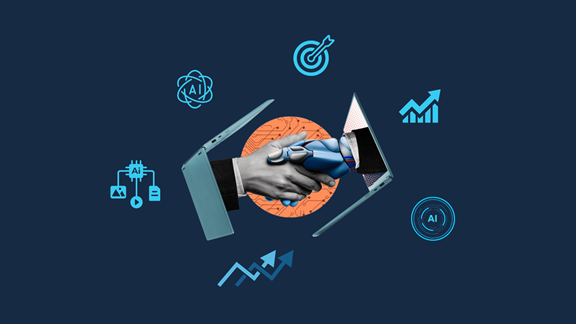
AI Development in Businesses
AI development plays a crucial role in automating processes, optimizing decision-making, and delivering predictive insights. By developing custom AI solutions, businesses can improve efficiency, reduce operational costs, and introduce innovative services or products tailored to their market.
Machine Learning in Businesses
Machine learning enables businesses to analyze large datasets and uncover hidden patterns or trends. This ability allows businesses to make better predictions, enhance customer experiences, and improve operational efficiencies, particularly in areas like supply chain management and marketing strategies.
Natural Language Processing (NLP) in Businesses
NLP enables machines to understand and interpret human language. By integrating NLP into business operations, companies can automate customer service with chatbots, improve sentiment analysis, and streamline tasks like content generation and data entry.
Computer Vision in Businesses
Computer vision empowers businesses to process and analyze visual data at scale. This technology can be used for tasks such as quality control in manufacturing, facial recognition for security, or automating document analysis, all of which improve efficiency and reduce human error.
ChatBot Development in Businesses
AI-powered chatbots can handle customer inquiries around the clock, providing instant responses to common questions. This improves customer satisfaction while reducing the workload on human agents, allowing businesses to focus on more complex tasks that require personal interaction.
Generative AI in Businesses
Generative AI enables the creation of new content, such as text, images, or even music, from large datasets. Businesses can leverage this technology to automate creative processes, generate marketing materials, or create unique product designs, giving them a competitive edge in the market.
Predictive Analysis in Businesses
Predictive analysis, powered by AI, allows businesses to forecast future trends based on historical data. This can help companies anticipate customer behavior, optimize inventory management, and make more informed decisions, all of which contribute to greater operational efficiency and cost savings.
Top Benefits of AI Integration for Businesses
Boosting Productivity: AI Automation Cuts Costs by 30% in Businesses
At the core of AI integration is business process automation. AI systems can automate repetitive, time-consuming tasks such as data entry, customer support, and inventory management. By automating these processes, businesses can free up employees to focus on more strategic and innovative tasks. Studies show that companies adopting AI-powered automation experience up to a 40% increase in productivity, with reduced operational costs. For instance, AI can streamline supply chain management, reducing lead times and improving operational efficiency.
Improving Decision-Making: AI Boosts Efficiency by 22% in Businesses
AI excels in providing predictive analytics in business, enabling companies to make informed, data-driven decisions. By analyzing large datasets, AI can identify patterns and trends that are difficult for humans to detect. These insights allow companies to anticipate customer needs, forecast market trends, and make smarter, quicker decisions. For example, using AI-driven decision-making, financial institutions can better assess risk and optimize investment strategies.
Scaling Business: AI Reduces Overhead and Streamlines Operations
One of the significant benefits of AI is its ability to scale operations without a proportional increase in resources. Whether it’s managing a high volume of customer inquiries using AI-powered chatbots or automating complex financial reports, AI can handle an increasing workload without requiring additional staff. This scalability allows businesses to grow efficiently and sustainably.
Unlocking New Revenue Streams with AI-Powered Innovation
Innovative AI technologies, such as generative AI, enable businesses to explore entirely new markets and revenue streams. From creating personalized marketing campaigns to developing AI-generated product designs, companies can leverage AI to stay ahead of the competition.
Challenges of Implementing AI in Businesses
Overcoming Resistance from Stakeholders
Despite its benefits, AI adoption often faces resistance from stakeholders who are concerned about its risks or unsure of its potential. Winning over key decision-makers requires clear communication of AI’s value, including demonstrating how it can reduce costs and drive innovation. Engaging stakeholders early and providing them with the necessary education and training on AI’s capabilities can help overcome this resistance.
Bridging the Skills Gap for AI Adoption
Successfully implementing AI requires a workforce skilled in data science, machine learning, and AI model development. However, many businesses struggle with a skills gap in these areas. Addressing this challenge involves investing in employee training programs or partnering with AI development experts who can bring the necessary expertise to your team.
Managing and Ensuring the Quality of Data
AI systems rely heavily on accurate, high-quality data. Poor data quality or disorganized data can lead to suboptimal AI outcomes. Establishing robust data management processes, including data governance frameworks and data security protocols, is crucial for ensuring the success of AI initiatives.
Strategies for AI Integration in Companies
Assessing Business Needs and Market Trends
Before integrating AI, it’s essential to evaluate your business needs and analyze current market trends. Understanding where AI can provide the most value to your company will help you develop a targeted AI business strategy that addresses your specific challenges.
Identifying the Most Suitable AI Applications
Not all AI technologies are applicable to every business. By identifying the most suitable AI applications for your company—whether it’s AI for predictive maintenance in manufacturing or AI-based fraud detection in financial services—you can ensure that your AI investments yield the highest return.
Collaborating with AI Development Experts
Partnering with AI specialists is critical for successful implementation. Working with experts can help tailor AI solutions to your business needs, ensuring smooth integration from strategy development to the deployment of AI-powered tools for long-term success.
The Future of AI in Business

Future-Proofing Businesses by Adopting AI Early
As AI technology continues to advance, businesses that adopt AI early will gain a competitive edge. Early adopters can develop AI systems that evolve with the market, ensuring they remain at the forefront of innovation. Future-proofing your business means leveraging AI to anticipate changes and stay ahead of competitors.
Leveraging Generative AI for Rapid Market Disruption
Generative AI is transforming industries by enabling rapid innovation. Companies that integrate generative AI into their operations can create first-of-its-kind products, disrupt markets, and establish themselves as industry leaders.
Conclusion AI in Businesses
AI is no longer an optional technology; it’s a necessity for businesses seeking to optimize their operations, improve decision-making, and stay competitive. At Hyper Baraaq, we are committed to providing cutting-edge AI solutions that empower businesses to thrive in an increasingly AI-driven world. By automating processes, enhancing insights, and enabling innovation, AI will continue to be a critical tool for businesses of all sizes.
What’s New?
AI is projected to revolutionize industries by significantly reducing operational costs. According to Forbes, AI-driven automation and optimization could lead to cost savings of up to $4 trillion globally by 2035. This includes savings in labor costs through process automation, reduced errors in data management, improved supply chain efficiencies, and enhanced decision-making. Companies leveraging AI technologies can streamline operations, minimize downtime, and improve resource allocation, allowing them to operate more efficiently and stay competitive in the global market.
References
- Forbes on AI in Business: https://www.forbes.com/advisor/business/software/ai-in-business/
- Investopedia on AI in Business: https://www.investopedia.com/how-ai-is-used-in-business-8611256
- Harvard Business Review on AI Integration: https://hbr.org/2023/07/what-smart-companies-know-about-integrating-ai
- Forbes Tech Council on AI Integration Strategies: https://www.forbes.com/councils/forbestechcouncil/2024/04/30/how-to-effectively-integrate-ai-into-your-business-operations/
FAQ’s
What is AI integration in business?
AI integration in business involves incorporating artificial intelligence technologies into business operations to automate processes, enhance decision-making, and improve efficiency.
How does AI help businesses increase productivity?
AI automates repetitive tasks, allowing employees to focus on higher-level strategic activities, thus increasing overall productivity and reducing operational costs.
What are some common uses of AI in business?
AI is used in customer support (chatbots), data analysis, predictive maintenance, supply chain optimization, and personalized marketing.
How can AI improve decision-making?
AI analyzes large datasets to identify trends and patterns that human analysts may miss, leading to faster, more accurate, data-driven decisions.
What is the role of machine learning in business?
Machine learning enables systems to learn from data and improve over time, helping businesses optimize processes, forecast trends, and improve customer experience.
What are the benefits of AI-powered chatbots?
AI chatbots provide 24/7 customer support, handle common queries instantly, and reduce the need for human intervention, improving response times and customer satisfaction.
How does AI-driven predictive analysis benefit businesses?
Predictive analysis helps businesses anticipate market trends, customer behavior, and operational challenges, allowing for proactive decision-making.
What industries can benefit the most from AI?
AI can be applied across various industries, including healthcare, finance, retail, manufacturing, and logistics, to improve efficiency, reduce costs, and innovate.
How does NLP impact business operations?
Natural Language Processing (NLP) helps businesses automate tasks such as sentiment analysis, customer service interactions, and document processing, improving overall efficiency.
Is AI a cost-effective solution for businesses?
Yes, AI can significantly reduce costs by automating labor-intensive processes, optimizing resource allocation, and reducing errors, leading to long-term cost savings.
Leave a Reply