Category: Blog

Your blog category

  • AI Integration in Businesses: Automating Manual Processes for Business Growth

    AI Integration in Businesses: Automating Manual Processes for Business Growth

    Businesses often face inefficiencies and slow decision-making due to overwhelming unstructured data and manual processes, leading to increased costs and missed growth opportunities. AI offers a solution by automating repetitive tasks and providing data-driven insights for faster, more accurate decisions. These solutions streamline processes and contribute to the growth and competitiveness of companies.

    According to Forbes, AI is projected to contribute a staggering $15.7 trillion to the global economy by 2030. This immense economic impact will be driven by AI’s ability to boost productivity, create new markets, and enhance customer experiences across industries. By automating tasks, optimizing operations, and enabling more accurate decision-making, AI will not only increase efficiency but also drive innovation, leading to new business models and revenue streams that fuel global economic growth.

    This article will explore the importance of AI integration in business, the challenges involved, and the strategies needed for successful adoption.

    Key Takeaways – AI Integration in Businesses

    • AI helps businesses make faster, data-driven decisions, reducing costs and increasing productivity through automation.
    • AI-powered solutions drive innovation, opening new revenue streams and enhancing customer satisfaction with personalized experiences.
    • Early AI adopters gain a competitive edge by staying ahead of technological trends and improving operational efficiency.
    • Successful AI integration requires overcoming stakeholder resistance, aligning technology with business goals, and ensuring strong data governance.

    AI’s Impact on Business Operations

    Automating Repetitive Tasks to Free Up Employee Time

    One of the most significant impacts of AI is its ability to automate routine tasks, such as payroll management, data analysis, and customer support. By automating these processes, businesses can save time and resources while improving accuracy and efficiency.

    Enhancing Customer Support through AI-Powered Tools

    AI-powered tools like AI-enabled customer support chatbots can handle customer inquiries 24/7, providing quick and accurate responses. These tools reduce wait times, improve customer satisfaction, and enable businesses to provide personalized experiences by analyzing customer data and preferences.

    Streamlining Supply Chain Management with Predictive Analytics

    AI helps optimize supply chain management by predicting demand, managing inventory, and identifying potential disruptions. With predictive analytics, businesses can make more informed decisions about production and distribution, reducing costs and improving efficiency.

    How Key AI Services Can Impact Business Operations
    How Key AI Services Can Impact Business Operations
    How Key AI Services Can Impact Business Operations

    AI Development in Businesses

    AI development plays a crucial role in automating processes, optimizing decision-making, and delivering predictive insights. By developing custom AI solutions, businesses can improve efficiency, reduce operational costs, and introduce innovative services or products tailored to their market.

    Machine Learning in Businesses

    Machine learning enables businesses to analyze large datasets and uncover hidden patterns or trends. This ability allows businesses to make better predictions, enhance customer experiences, and improve operational efficiencies, particularly in areas like supply chain management and marketing strategies.

    Natural Language Processing (NLP) in Businesses

    NLP enables machines to understand and interpret human language. By integrating NLP into business operations, companies can automate customer service with chatbots, improve sentiment analysis, and streamline tasks like content generation and data entry.

    Computer Vision in Businesses

    Computer vision empowers businesses to process and analyze visual data at scale. This technology can be used for tasks such as quality control in manufacturing, facial recognition for security, or automating document analysis, all of which improve efficiency and reduce human error.

    ChatBot Development in Businesses

    AI-powered chatbots can handle customer inquiries around the clock, providing instant responses to common questions. This improves customer satisfaction while reducing the workload on human agents, allowing businesses to focus on more complex tasks that require personal interaction.

    Generative AI in Businesses

    Generative AI enables the creation of new content, such as text, images, or even music, from large datasets. Businesses can leverage this technology to automate creative processes, generate marketing materials, or create unique product designs, giving them a competitive edge in the market.

    Predictive Analysis in Businesses

    Predictive analysis, powered by AI, allows businesses to forecast future trends based on historical data. This can help companies anticipate customer behavior, optimize inventory management, and make more informed decisions, all of which contribute to greater operational efficiency and cost savings.

    Top Benefits of AI Integration for Businesses

    Boosting Productivity: AI Automation Cuts Costs by 30% in Businesses

    At the core of AI integration is business process automation. AI systems can automate repetitive, time-consuming tasks such as data entry, customer support, and inventory management. By automating these processes, businesses can free up employees to focus on more strategic and innovative tasks. Studies show that companies adopting AI-powered automation experience up to a 40% increase in productivity, with reduced operational costs. For instance, AI can streamline supply chain management, reducing lead times and improving operational efficiency.

    Improving Decision-Making: AI Boosts Efficiency by 22% in Businesses

    AI excels in providing predictive analytics in business, enabling companies to make informed, data-driven decisions. By analyzing large datasets, AI can identify patterns and trends that are difficult for humans to detect. These insights allow companies to anticipate customer needs, forecast market trends, and make smarter, quicker decisions. For example, using AI-driven decision-making, financial institutions can better assess risk and optimize investment strategies.

    Scaling Business: AI Reduces Overhead and Streamlines Operations

    One of the significant benefits of AI is its ability to scale operations without a proportional increase in resources. Whether it’s managing a high volume of customer inquiries using AI-powered chatbots or automating complex financial reports, AI can handle an increasing workload without requiring additional staff. This scalability allows businesses to grow efficiently and sustainably.

    Unlocking New Revenue Streams with AI-Powered Innovation

    Innovative AI technologies, such as generative AI, enable businesses to explore entirely new markets and revenue streams. From creating personalized marketing campaigns to developing AI-generated product designs, companies can leverage AI to stay ahead of the competition.

    Challenges of Implementing AI in Businesses

    Overcoming Resistance from Stakeholders

    Despite its benefits, AI adoption often faces resistance from stakeholders who are concerned about its risks or unsure of its potential. Winning over key decision-makers requires clear communication of AI’s value, including demonstrating how it can reduce costs and drive innovation. Engaging stakeholders early and providing them with the necessary education and training on AI’s capabilities can help overcome this resistance.

    Bridging the Skills Gap for AI Adoption

    Successfully implementing AI requires a workforce skilled in data science, machine learning, and AI model development. However, many businesses struggle with a skills gap in these areas. Addressing this challenge involves investing in employee training programs or partnering with AI development experts who can bring the necessary expertise to your team.

    Managing and Ensuring the Quality of Data

    AI systems rely heavily on accurate, high-quality data. Poor data quality or disorganized data can lead to suboptimal AI outcomes. Establishing robust data management processes, including data governance frameworks and data security protocols, is crucial for ensuring the success of AI initiatives.

    Strategies for AI Integration in Companies

    Assessing Business Needs and Market Trends

    Before integrating AI, it’s essential to evaluate your business needs and analyze current market trends. Understanding where AI can provide the most value to your company will help you develop a targeted AI business strategy that addresses your specific challenges.

    Identifying the Most Suitable AI Applications

    Not all AI technologies are applicable to every business. By identifying the most suitable AI applications for your company—whether it’s AI for predictive maintenance in manufacturing or AI-based fraud detection in financial services—you can ensure that your AI investments yield the highest return.

    Collaborating with AI Development Experts

    Partnering with AI specialists is critical for successful implementation. Working with experts can help tailor AI solutions to your business needs, ensuring smooth integration from strategy development to the deployment of AI-powered tools for long-term success.

    The Future of AI in Business

    The Future of AI in Business
    The Future of AI in Business

    Future-Proofing Businesses by Adopting AI Early

    As AI technology continues to advance, businesses that adopt AI early will gain a competitive edge. Early adopters can develop AI systems that evolve with the market, ensuring they remain at the forefront of innovation. Future-proofing your business means leveraging AI to anticipate changes and stay ahead of competitors.

    Leveraging Generative AI for Rapid Market Disruption

    Generative AI is transforming industries by enabling rapid innovation. Companies that integrate generative AI into their operations can create first-of-its-kind products, disrupt markets, and establish themselves as industry leaders.

    Conclusion AI in Businesses

    AI is no longer an optional technology; it’s a necessity for businesses seeking to optimize their operations, improve decision-making, and stay competitive. At Hyper Baraaq, we are committed to providing cutting-edge AI solutions that empower businesses to thrive in an increasingly AI-driven world. By automating processes, enhancing insights, and enabling innovation, AI will continue to be a critical tool for businesses of all sizes.

    What’s New?

    AI is projected to revolutionize industries by significantly reducing operational costs. According to Forbes, AI-driven automation and optimization could lead to cost savings of up to $4 trillion globally by 2035. This includes savings in labor costs through process automation, reduced errors in data management, improved supply chain efficiencies, and enhanced decision-making. Companies leveraging AI technologies can streamline operations, minimize downtime, and improve resource allocation, allowing them to operate more efficiently and stay competitive in the global market.

    References

    1. Forbes on AI in Business: https://www.forbes.com/advisor/business/software/ai-in-business/
    2. Investopedia on AI in Business: https://www.investopedia.com/how-ai-is-used-in-business-8611256
    3. Harvard Business Review on AI Integration: https://hbr.org/2023/07/what-smart-companies-know-about-integrating-ai
    4. Forbes Tech Council on AI Integration Strategies: https://www.forbes.com/councils/forbestechcouncil/2024/04/30/how-to-effectively-integrate-ai-into-your-business-operations/

    FAQ’s

    What is AI integration in business?
    AI integration in business involves incorporating artificial intelligence technologies into business operations to automate processes, enhance decision-making, and improve efficiency.

    How does AI help businesses increase productivity?
    AI automates repetitive tasks, allowing employees to focus on higher-level strategic activities, thus increasing overall productivity and reducing operational costs.

    What are some common uses of AI in business?
    AI is used in customer support (chatbots), data analysis, predictive maintenance, supply chain optimization, and personalized marketing.

    How can AI improve decision-making?
    AI analyzes large datasets to identify trends and patterns that human analysts may miss, leading to faster, more accurate, data-driven decisions.

    What is the role of machine learning in business?
    Machine learning enables systems to learn from data and improve over time, helping businesses optimize processes, forecast trends, and improve customer experience.

    What are the benefits of AI-powered chatbots?
    AI chatbots provide 24/7 customer support, handle common queries instantly, and reduce the need for human intervention, improving response times and customer satisfaction.

    How does AI-driven predictive analysis benefit businesses?
    Predictive analysis helps businesses anticipate market trends, customer behavior, and operational challenges, allowing for proactive decision-making.

    What industries can benefit the most from AI?
    AI can be applied across various industries, including healthcare, finance, retail, manufacturing, and logistics, to improve efficiency, reduce costs, and innovate.

    How does NLP impact business operations?
    Natural Language Processing (NLP) helps businesses automate tasks such as sentiment analysis, customer service interactions, and document processing, improving overall efficiency.

    Is AI a cost-effective solution for businesses?
    Yes, AI can significantly reduce costs by automating labor-intensive processes, optimizing resource allocation, and reducing errors, leading to long-term cost savings.

  • AI in Retail: Revolutionizing the Shopping Experience

    AI in Retail: Revolutionizing the Shopping Experience

    AI in Retail: Revolutionizing the Shopping Experience

    Introduction to AI in Retail

    Have you ever wondered how your favorite online store seems to know exactly what you want, sometimes even before you do? Artificial Intelligence (AI) is reshaping industries globally, and retail is at the forefront of this transformation. By automating operations, enhancing customer experiences, and providing data-driven insights, AI is proving to be a game-changer. Retailers are increasingly adopting AI technologies to stay competitive, address customer demands, and improve operational efficiency. In a 2023 report by McKinsey, AI adoption in retail was projected to drive an estimated $2.95 trillion in potential value globally by 2030, emphasizing the profound impact AI is having on the industry.

    In this article, we will explore how AI is addressing the current challenges in retail, and how it is revolutionizing areas such as personalized shopping experiences, dynamic pricing, customer interaction, inventory management, and more.

    Key Takeaways

    • AI offers scalable personalization and enhanced customer insights, helping retailers understand consumer behavior and preferences.
    • Dynamic pricing algorithms driven by AI help retailers adapt in real-time, optimizing profitability.
    • AI-powered chatbots and virtual assistants improve customer service efficiency and reduce operational costs.
    • Machine learning algorithms provide demand forecasting, preventing overstock and stockouts.
    • AI helps identify and prevent fraud while enhancing transaction security.
    • Ethical considerations around AI usage, particularly in data privacy, are crucial for building consumer trust.

    Current Problems in the Retail Industry

    The retail industry faces several challenges, including inventory mismanagement, inefficient customer service, pricing strategies, and adapting to fast-changing consumer preferences. According to a National Retail Federation study, over 60% of retailers struggle with issues like inaccurate demand forecasting, which leads to overstocking or stockouts, resulting in lost sales and excess inventory costs.

    Additionally, in an increasingly digital world, customers expect personalized, seamless shopping experiences both online and in-store. Retailers face mounting pressure to meet these expectations without significantly increasing costs.

    How AI Can Current Problem in the Retail Industry

    How AI Can Solve Retail Problems
    How AI Can Solve Retail Problems

    AI offers retail solutions to many of the industry’s pressing issues. From optimizing supply chains to improving customer service and offering personalized experiences, AI has the potential to address both operational inefficiencies and customer engagement challenges.

    Personalization at Scale

    Offering Tailored Product Recommendations

    AI allows retailers to offer personalized product recommendations based on customer behavior and preferences. E-commerce giants like Amazon and Alibaba have been at the forefront of using AI algorithms to analyze browsing history, past purchases, and online behavior to recommend products. A study by Salesforce found that 67% of customers expect brands to personalize their experiences, and personalized recommendations lead to a 30% increase in sales on average.

    Enhancing Customer Satisfaction Through AI

    AI helps retailers deliver customized experiences by analyzing data to better understand customer needs. Machine learning models can predict what a customer might be interested in based on previous interactions, resulting in tailored promotions and personalized experiences that increase customer loyalty.

    Enhanced Customer Insights

    Gaining Valuable Consumer Behavior Insights

    AI enables retailers to gain in-depth insights into consumer behavior. Machine learning algorithms analyze massive datasets from multiple sources—web activity, purchase history, and social media—allowing retailers to build a complete picture of consumer preferences and habits. This level of insight helps retailers develop more effective marketing campaigns and product offerings that resonate with their audience.

    Optimizing Marketing and Product Offerings

    Retailers can use AI to dynamically optimize marketing strategies and product offerings. According to a report by PwC, 62% of consumers expect brands to anticipate their needs, and AI-driven insights help retailers deliver targeted campaigns with higher engagement and conversion rates.

    Dynamic Pricing Strategies

    Adapting Pricing Based on Market and Competitor Analysis

    AI-driven dynamic pricing adjusts prices in real-time by analyzing competitor prices, market demand, and customer behavior. Retailers like Walmart and Target use AI algorithms to set competitive prices, ensuring they attract price-sensitive customers while maintaining profitability. Research shows that AI-powered dynamic pricing can increase profit margins by up to 10%.

    Maximizing Profitability Through Real-Time Adjustments

    AI can adjust pricing for products based on factors like demand fluctuations, time of day, and customer behavior. For example, an AI-powered tool can lower prices to move excess inventory or increase them when demand spikes, ensuring maximum profitability in real time.

    Automated Customer Interactions

    AI-Driven Chatbots and Virtual Assistants

    AI-driven chatbots and virtual assistants have become increasingly prevalent in retail, providing real-time assistance to customers. Gartner estimates that by 2025, AI will handle 80% of customer service interactions. These chatbots can answer frequently asked questions, guide customers through product searches, and even process orders—freeing up human agents for more complex tasks.

    24/7 Customer Support and Increased Efficiency

    AI-powered chatbots provide 24/7 customer support, offering instant responses to customer queries and ensuring a seamless shopping experience. This improves customer satisfaction and reduces operational costs, as fewer human resources are required to manage customer service.

    AI Targeted Advertising Campaigns

    Ai Targeted Advertising Campaigns
    AI in Retail: Revolutionizing the Shopping Experience

    Data-Driven Audience Segmentation

    AI allows for hyper-targeted advertising campaigns by using data-driven audience segmentation. Retailers can leverage AI to identify specific customer segments based on their purchasing behavior, demographics, and online activity. AI tools like Google Ads and Facebook’s AI algorithms allow advertisers to create personalized ads that reach the right audience at the right time, improving engagement and conversion rates.

    Creating Hyper-Targeted Ads to Improve Engagement

    Hyper-targeted ads ensure that promotional content is relevant to the audience, leading to higher click-through rates (CTR) and conversion rates. AI enables retailers to create dynamic, personalized ads that change based on the individual viewer, ensuring that each ad speaks to the consumer’s unique preferences.

    Inventory Management and Demand Forecasting

    Predicting Demand with Machine Learning Algorithms

    Effective inventory management is a challenge for many retailers, but AI-powered demand forecasting is revolutionizing the process. Machine learning algorithms can analyze historical sales data, market trends, and external factors such as weather patterns or holidays to predict future demand. A McKinsey report found that AI-powered demand forecasting can reduce forecasting errors by up to 50%, helping retailers avoid costly stockouts or overstock situations.

    Reducing Overstock and Stockouts

    AI-driven demand forecasting helps retailers maintain optimal inventory levels, reducing overstock and stockout issues. Retailers can make better decisions about when to replenish stock or discount products to avoid excess inventory, leading to a more efficient supply chain and improved profitability.

    Fraud Prevention and Security

    Identifying Fraudulent Activities Through AI

    AI plays a crucial role in fraud prevention by analyzing transaction data to detect anomalies that could indicate fraudulent activity. Machine learning models can learn to identify patterns in real-time, helping retailers catch fraud before it impacts their bottom line. In fact, AI can reduce fraud detection times by up to 80%, according to a report by IBM.

    Enhancing Transaction Security

    AI-driven fraud detection systems can monitor transactions across multiple channels, flagging suspicious activities and enhancing overall transaction security. As the retail industry increasingly relies on digital payments, these AI-driven security solutions are essential for protecting consumer data and preventing losses due to fraud.

    Ethical Data Usage and Privacy Concerns

    Balancing AI Benefits with Consumer Data Privacy

    While AI offers immense benefits, it also raises concerns regarding data privacy. Retailers must ensure that they are using consumer data ethically and transparently. In an era where data breaches are becoming more common, customers expect brands to handle their personal information responsibly. According to a PwC survey, 84% of consumers say they will not engage with a business if they have concerns about their data privacy.

    Building Trust Through Transparent Practices

    Building trust with consumers is essential for long-term success. Retailers must be transparent about how they collect and use data. Implementing privacy policies that are easy to understand and allowing customers to opt out of data collection are essential practices that help build trust and ensure compliance with regulations such as GDPR.

    Conclusion – AI in Retail

    AI is reshaping the retail landscape, providing solutions to long-standing challenges like personalization, inventory management, pricing, and fraud detection. Retailers that embrace AI are well-positioned to provide enhanced customer experiences, improve operational efficiency, and maintain a competitive edge. However, as AI becomes more integrated into retail operations, companies must also focus on ethical data usage and maintaining consumer trust.

    By leveraging AI effectively, retailers can achieve scalable growth, adapt to market changes, and deliver exceptional value to customers.

    References

    1. McKinsey & Company
    2. Salesforce Report
    3. National Retail Federation Study
    4. Gartner
    5. IBM Report

    FAQs

    1. How is AI transforming the retail industry?

    AI is transforming retail by optimizing supply chains, personalizing customer experiences, automating customer service, and improving fraud detection.

    2. What is AI-driven personalization in retail?

    AI-driven personalization involves using customer data to provide tailored product recommendations, personalized ads, and customized shopping experiences.

    3. How does AI enhance inventory management?

    AI-powered demand forecasting helps retailers maintain optimal stock levels, reducing overstock and stockout issues by predicting future demand.

    4.What are the ethical concerns surrounding AI in retail?

    Ethical concerns around AI in retail include data privacy and ensuring that customer data is handled transparently and responsibly.

    5. How does AI help prevent fraud in retail?

    AI helps prevent fraud by analyzing transaction data to identify patterns and anomalies, reducing fraud detection time and enhancing overall transaction security.


  • Are You Looking to Increase Your Sales with AI? – Machine Learning in Marketing In 2025

    Are You Looking to Increase Your Sales with AI? – Machine Learning in Marketing In 2025

    Are You Looking to Increase Your Sales with AI? – Machine Learning In Marketing

    In today’s competitive digital marketplace, businesses face increasing challenges in capturing the attention of consumers, optimizing their marketing campaigns, and maximizing return on investment (ROI). Traditional marketing strategies are often costly, time-consuming, and inefficient. Marketers struggle with effectively segmenting audiences, delivering personalized content, and predicting consumer behavior in real-time.

    This is where artificial intelligence (AI) and machine learning (ML) step in. These technologies are transforming the marketing landscape, offering solutions to some of the most pressing challenges faced by marketers today. In this blog, we explore the problems with current marketing practices and show how AI and machine learning can help businesses overcome them to drive sales, increase efficiency, and enhance customer engagement.


    Key Takeaways

    1. Machine Learning Solves Key Marketing Challenges:
      Traditional marketing struggles with inefficient segmentation, lack of personalization, and time-consuming campaign analysis. Machine learning effectively tackles these issues by automating processes and enabling precise customer targeting.
    2. AI Enables Data-Driven Personalization at Scale:
      With machine learning, businesses can deliver highly personalized content and experiences to millions of customers simultaneously, driving increased engagement and higher conversion rates.
    3. Significant ROI Gains with AI-Powered Marketing:
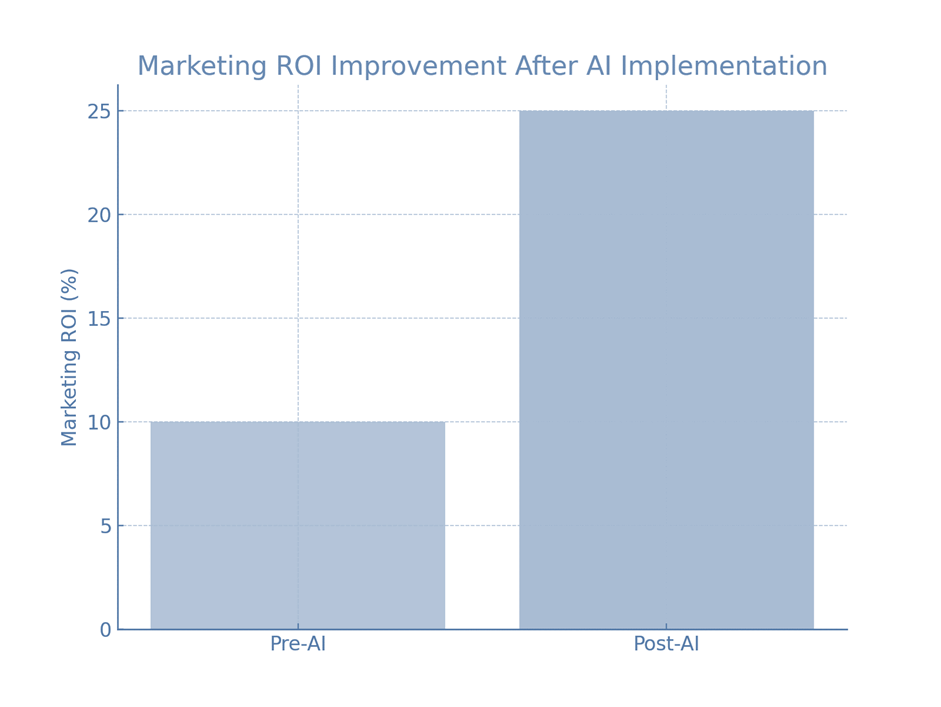
      Companies using AI for marketing report a 15-30% improvement in return on investment (ROI) by optimizing campaign performance, reducing costs, and improving customer retention.
    4. Faster, Smarter Campaign Optimization:
      Machine learning drastically reduces the time spent analyzing campaign performance, allowing marketers to optimize strategies in real-time, increasing overall marketing efficiency.
    5. Future-Proof Your Business with AI:
      As AI adoption continues to rise, businesses that embrace machine learning technologies now will gain a significant competitive edge by streamlining operations and staying ahead of market trends.

    What is Machine Learning?


    Machine learning is a branch of artificial intelligence that allows systems to learn and improve from experience without being explicitly programmed. At its core, machine learning is a branch of artificial intelligence (AI) that enables computers to learn from data and make decisions or predictions without being explicitly programmed. Machine learning models analyze vast amounts of data to identify patterns, trends, and insights. These models become more accurate over time as they “learn” from new data.

    In marketing, this means analyzing large sets of data to recognize patterns, predict customer behaviors, and make data-driven decisions in real time.

    Types of Machine Learning

    Supervised Learning: In supervised learning, a model is trained using labeled data, where the outcome is already known. In marketing, this can be used to predict customer responses to different ads based on past data. A model can learn from previous campaigns to determine which type of message works best for a certain demographic.Unsupervised Learning: With unsupervised learning, the model works with unlabeled data and identifies hidden patterns. A prime example in marketing is customer segmentation, where machine learning helps group customers based on behavior, allowing for more personalized campaigns.Reinforcement Learning: In reinforcement learning, an algorithm learns by trial and error, receiving feedback based on actions taken. A typical marketing example is optimizing ad placements in real time to maximize engagement based on user interaction.

    Problems with Traditional Marketing and How AI/ML Solve Them

    Problems with Traditional Marketing
    Problems with Traditional Marketing

    Traditional marketing often involves guesswork, manual segmentation, and repetitive tasks. Below are common issues in marketing today:

    – Inefficient Segmentation: Manual customer segmentation is often too broad, leading to irrelevant messages for the audience.
    – Lack of Personalization: Many brands struggle to deliver personalized experiences at scale.
    – Time-consuming Analysis: Marketers spend hours analyzing campaign performance, limiting time for strategy development.

    With AI and machine learning, these problems are tackled head-on:

    Machine learning allows for dynamic, accurate customer segmentation.
    AI delivers personalized content to millions of users in real time, increasing engagement.
    Campaign performance analysis is automated and optimized with predictive analytics, saving marketers countless hours.

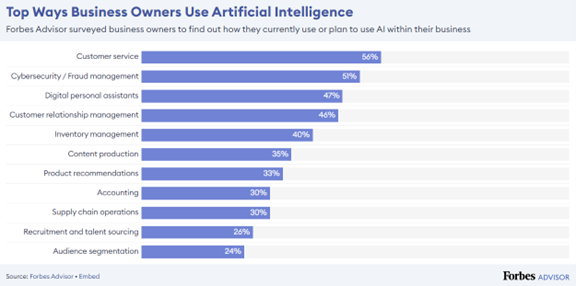
    Top ways Business Owners Use AI
    Top ways Business Owners Use AI

    According to the Forbes Advisor survey, businesses are using AI across a wide range of areas.

    How Machine Learning Has Impacted the Way Businesses Operate


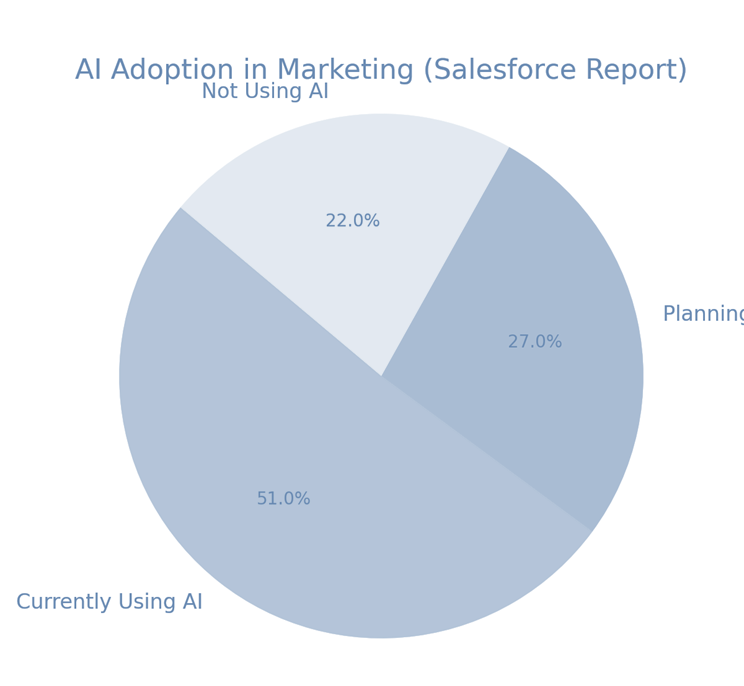
    Machine learning has had a significant impact on business efficiency and profitability. Companies that implement AI see a marked improvement in their marketing performance. According to a report by McKinsey, businesses that use AI for marketing have seen a 15-30% increase in marketing ROI. Furthermore, Salesforce reports that 51% of marketing leaders are already using AI in some form, with another 27% planning to do so within two years.

    From automating mundane tasks to generating actionable insights, machine learning has unlocked efficiencies that were once unimaginable. Some of the most significant impacts include:

    Streamlining Business Processes: Businesses no longer need to rely on manual processes. Machine learning algorithms can automate everything from customer service through chatbots to inventory management in retail industries.

    Enhanced Decision Making: With machine learning, businesses can analyze vast amounts of data and gain valuable insights, allowing them to make data-driven decisions faster than ever before.

    Cost Efficiency: Traditional marketing methods have proven to be costly and inefficient. Machine learning helps businesses reduce unnecessary spending by targeting specific customer segments and behaviors, ensuring that marketing dollars are spent more effectively.


    Here’s a snapshot of key statistics on AI and marketing:
    – AI-powered campaigns improve customer retention by 10-15%.

    – Companies using AI report a 20% reduction in marketing costs by optimizing campaign performance.

    AI Adoption In Marketing (Salesforce Report)
    AI Adoption In Marketing (Salesforce Report)

    How Can Machine Learning Be Used in Marketing?

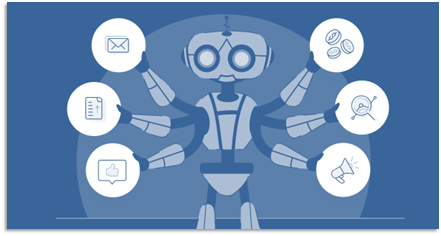
    Machine Learning In Marketing - Use Case
    Machine Learning In Marketing – Use Case

    The integration of machine learning in marketing has opened up new horizons. Here’s how marketing firms that provide machine learning and AI for marketing are making a difference:

    – Customer Segmentation Using Machine Learning: Machine learning can analyze customer data and segment audiences based on behavior, demographics, and preferences. Unlike traditional segmentation, which relies on predefined rules, machine learning continually adapts to new data, creating more accurate and dynamic segments. For instance, a retail company might use machine learning in the retail industry to group customers based on purchasing habits, enabling more personalized campaigns.

    – Predictive Analytics: Machine learning can predict customer behavior, helping marketers tailor their strategies. For example, a fintech company using machine learning can predict when a customer might be interested in upgrading their services or when they might churn.

    – Content Personalization: Machine learning algorithms can recommend personalized content based on customer preferences and interactions. Platforms like Netflix and Spotify use machine learning to suggest relevant content to users, significantly enhancing user engagement.

    – A/B Testing Machine Learning: Machine learning enhances traditional A/B testing by automating the process and testing multiple variables at once. This allows businesses to quickly identify the most effective marketing strategies, leading to higher conversion rates.

    Optimizing Marketing Campaigns with Machine Learning


    With traditional methods, a marketer may need hours to evaluate dozens of campaigns. Using machine learning, evaluation times shrink to minutes. For instance, a marketer assessing 20 advertising campaigns with 10 behavioral parameters for five customer segments might spend four hours analyzing results manually. Machine learning accomplishes this in a fraction of the time, offering insights across multiple segments and parameters.

    Furthermore, machine learning doesn’t just assess past performance. It predicts future trends, enabling businesses to optimize ongoing campaigns and improve customer targeting in real-time.

    Machine Learning In Digital Marketing

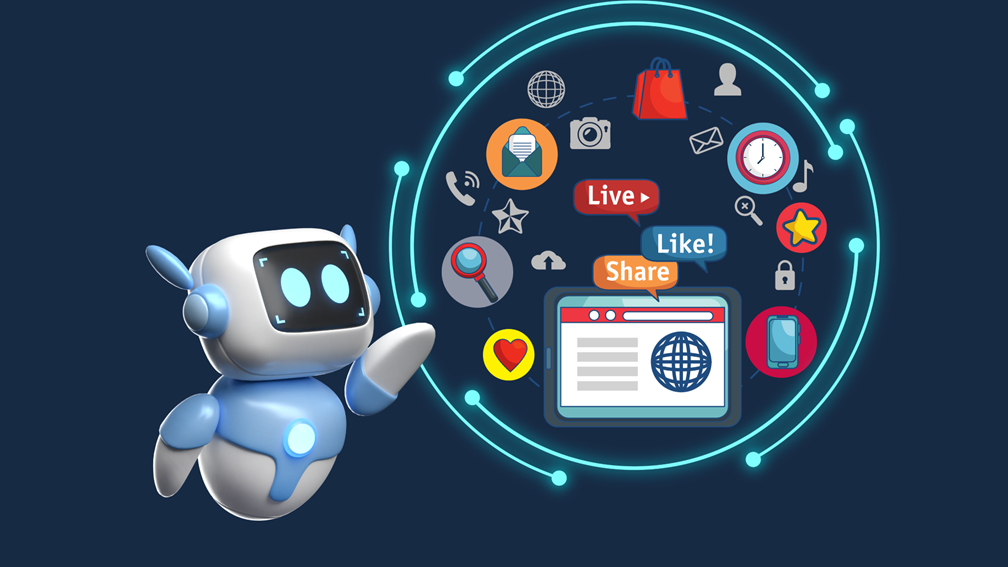
    Machine Learning In Marketing - Visualizatiion


    Machine learning in digital marketing helps businesses understand customer behavior, optimize ad placements, and improve the overall user experience. From chatbots that provide real-time customer service to algorithms that adjust pricing dynamically based on customer interactions, AI and ML are revolutionizing the digital marketing landscape.


    Machine learning has fundamentally changed digital marketing in several key ways:

    – Customer Journey Mapping: Machine learning helps businesses track and understand the entire customer journey. By analyzing a customer’s interactions across multiple touchpoints, businesses can optimize their marketing efforts to target customers at the right time with the right message.

    – Chatbots and AI-Driven Communication: Chatbots powered by machine learning enable businesses to engage with customers 24/7, providing instant responses to inquiries and guiding users through the sales funnel.

    – Programmatic Advertising: Machine learning plays a critical role in programmatic advertising, where ads are automatically purchased and placed in front of specific audiences. Algorithms analyze user data in real-time, ensuring ads are shown to the right people at the right time.

    Why Machine Learning is Effective in Marketing


    Machine learning offers unparalleled efficiency and effectiveness in marketing:

    – Speed and Scalability: Machine learning processes vast amounts of data at speeds no human can match. This scalability is crucial in today’s marketing landscape, where businesses deal with massive datasets from multiple sources.

    – Personalization at Scale: Machine learning can provide personalized experiences to millions of customers simultaneously. Whether it’s recommending products based on previous purchases or personalizing email content, machine learning scales personalization efforts in ways that were previously impossible.

    – Better ROI: By targeting the right customers with the right messages at the right time, businesses see a much better return on investment from their marketing efforts.

    Examples of Machine Learning In Marketing

    To illustrate the power of machine learning in marketing, here are a few real-world examples:

    – Amazon: Amazon uses machine learning to recommend products to customers based on their browsing and purchase history. This has significantly boosted sales and customer retention.

    – Spotify: Spotify’s recommendation engine uses machine learning to analyze listening habits and suggest new music to users, increasing user engagement and loyalty.

    – Starbucks: Starbucks leverages machine learning to optimize its marketing campaigns. By analyzing customer purchase patterns, the company personalizes offers, which has led to a notable increase in repeat purchases.

    – Netflix: Uses machine learning algorithms to recommend shows and movies, increasing viewer retention by 75%.


    Learn more about our professional Machine Learning solutions and services that can help transform your marketing strategy.

    Conclusion


    AI and machine learning are no longer futuristic concepts—they are transforming the way businesses approach marketing today. By leveraging machine learning, companies can not only solve the inefficiencies of traditional marketing but also boost their sales and customer engagement. As competition increases, businesses that adopt AI-driven marketing strategies early will have a significant edge in the marketplace.

    References

    1. How Machine Learning is Transforming Marketing,-Forbes.

    2. The Future of Marketing: Machine Learning and AI -Harvard Business Review.

    3. “Amazon’s Product Recommendations: Machine Learning in Action,” Business Insider.

    4. “Spotify’s Music Recommendations: How Machine Learning Powers Personalization,” TechCrunch.

    5. “Programmatic Advertising: Leveraging Machine Learning for Better Ad Targeting,” AdAge.

    FAQs


    Q1. What is the main advantage of using machine learning in marketing? 
    Machine learning enables businesses to deliver personalized marketing experiences at scale while automating time-consuming tasks such as customer segmentation and campaign performance analysis.

    Q2. How does machine learning help in customer segmentation? 
    Machine learning analyzes large datasets to create highly accurate and dynamic customer segments based on real-time behavior and preferences.

    Q3. Can machine learning predict customer behavior? 
    Yes, machine learning models can predict future customer actions by analyzing past behaviors, allowing marketers to anticipate needs and preferences.

    Q4. Is AI suitable for small businesses? 
    Absolutely. Many AI and machine learning tools are scalable and affordable, making them accessible to businesses of all sizes.